Marrung First Nations Education Strategy - Inner and Outer East Roadshow
The Marrung 2026–2036 First Nations Education Strategy was launched in September by the Department of Education, which covers early childhood services, primary and secondary schools, TAFEs and universities.
Building on the first ten years of the Marrung 2016-2026 Education Plan, it is the first time that the Victorian Catholic Education Authority (VCEA) and Independent Schools Victoria have joined with the Department of Education as partners in this shared commitment to improve First Nations education.
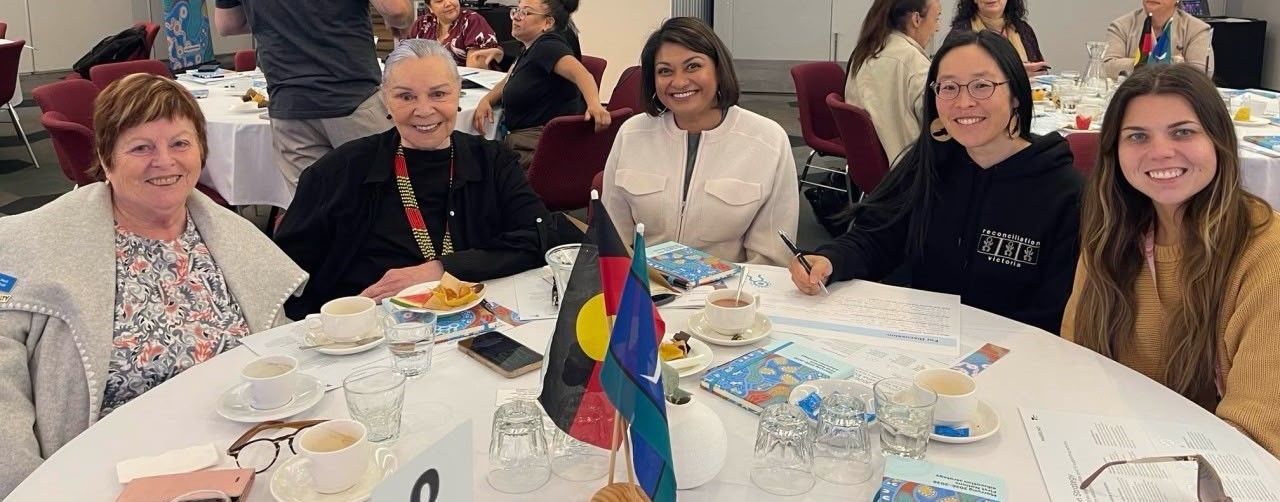
Reconciliation Victoria's Education Officer Emily Hui, a former Marrung Lead, attended the Marrung Inner and Outer East Roadshow, and was honoured to have table yarns with Dr Aunty Lois Peeler AM along with STRIVE member Marli Trail from It Takes a Village, Jana Perera from Swinburne and Kira Peters, a Dept of Ed Koorie Engagement Support Officer (KESO).

Local Inner and Outer East Panel
During the panel, we heard from local leaders about the importance of co-designing together with ally and First Peoples, the need to share the load to build all staff confidence and capactiy (not just Marrung Leads) and the value of humility and curiosity so that the hope that "this is something that teachers want to do, not just need to do, because they understand the impact" - Nikki Madgwick, VET Indigenous Project Officer within Swinburne's Moondani Vocational Centre of Excellence (MVCE).
LAECG Chair Lea Jones reminded us that we must acknowledge the First Languages for a true sense of reconciliation and to celebrate the achievements along the way.

Tom Cazaly, Director of Koorie Education Division – NEVR/SEVR
Marrung 2026–2036 is guided by 3 principles:
- self-determination
- systemic transformation
- cultural safety and responsiveness.
The strategy has 6 key priorities. These focus on:
- creating safe and welcoming places to learn (Workforce Capacity and Capability)
- strengthening partnerships with families and communities as guided by First Nations people (First Nations Leadership and Partnership)
- supporting First Nations people to reclaim and reconnect with Language (First Nations Languages)
- developing teachers’ skills and knowledge of First Nations perspectives in teaching and learning (Curriculum and Teacher Practice)
- making sure First Nations learners have education experiences and opportunities that reflect their goals and interests (Learner Engagement, Participation and Voice)
- providing culturally responsive support as learners move through early childhood education into school, further study, training and work. (Transitions and Pathways).
Learn more about the Marrung 2026–2036 First Nations Education Strategy.

